Cyber threats are evolving. Regulatory expectations continue to tighten. Artificial intelligence is accelerating faster than governance models can mature.
Operational disruption is no longer an exception to plan around. It is the environment organizations have to operate within.
In this reality, being “prepared” is not enough.
Organizations must be ready.
At Fellsway, our position is simple:
Cybersecurity readiness today requires more than policies, tools, or a passing audit score. It requires organizations to operate confidently during adversity, and to prove that capability to regulators, customers, insurers, and boards.
True readiness exists where compliance and resilience intersect.
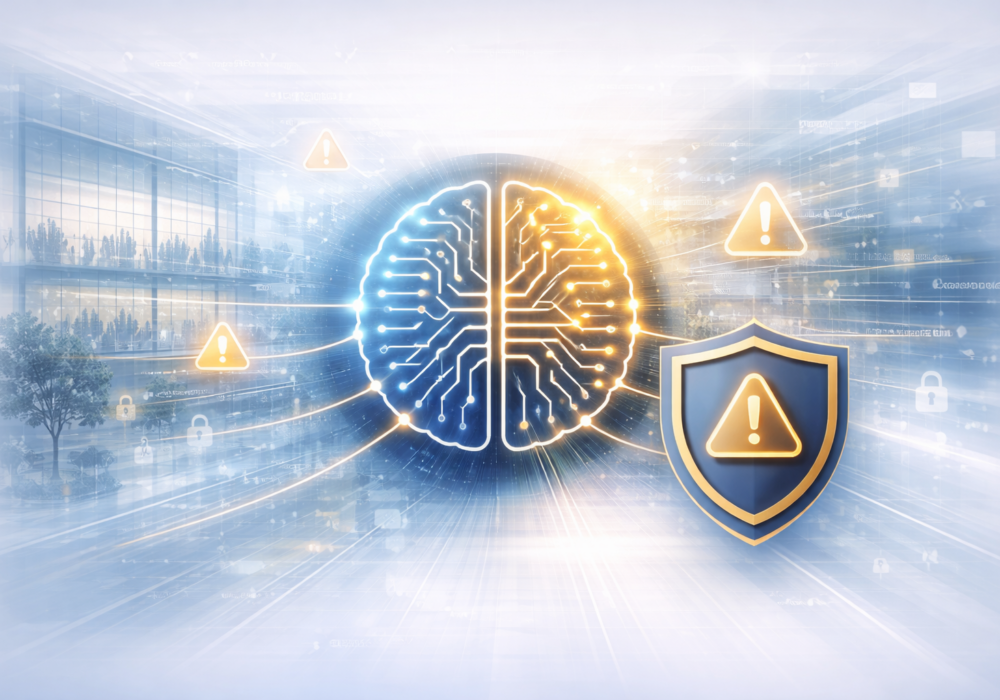
Artificial intelligence is introducing new layers of complexity to cybersecurity readiness.
AI systems create new risks across:
Innovation is moving faster than governance structures can mature.
At the same time, regulatory scrutiny is increasing across industries.
Boards are asking sharper questions:
Executives must answer these questions with evidence, not assumptions.
Organizations that can demonstrate validated controls, tested response plans, structured AI governance, and clear risk prioritization are not only safer, they are stronger.
For many leadership teams, compliance has become the default measure of cybersecurity maturity.
Compliance frameworks such as CMMC, NIST Cybersecurity Framework, HIPAA, and PCI DSS play an important role. They create structure, establish expectations, and enable organizations to demonstrate alignment with regulatory requirements.
Compliance builds credibility with:
It can also unlock new business opportunities in regulated industries.
But compliance alone is incomplete.
We frequently see organizations that can pass an audit yet struggle during a live cyber incident.
Policies are documented.
Controls are mapped to frameworks.
Evidence exists.
Yet when pressure rises:
Compliance confirms alignment to requirements. It does not guarantee operational performance under stress.
When compliance is treated as a periodic milestone rather than a sustained operational discipline, it gradually erodes. Controls drift from practice, documentation falls out of sync with reality, and organizations develop the illusion of security without the assurance of capability.
Some organizations take the opposite approach.
Instead of prioritizing compliance frameworks, they emphasize operational resilience.
They invest in modern security tools.
They test backups.
They conduct tabletop exercises.
They build capable response teams.
These organizations often perform far better during real-world incidents.
But resilience without proof introduces a different form of exposure.
If organizations cannot demonstrate how controls operate, how risks are governed, or how AI systems are managed, they may struggle during:
Operational strength without documented evidence becomes difficult to defend.
Resilience must be demonstrated, not assumed.
Real cybersecurity readiness emerges when compliance and resilience reinforce each other.
It is the ability to operate through adversity, and to prove that capability when it matters most.
Organizations that achieve readiness share several characteristics:
Readiness is not a maturity score or a policy binder.
It is how the organization performs under pressure.
The most common failure point we see is not a lack of intelligence, investment, or intent.
It is the space between strategy and execution.
Most mid-sized organizations already have many of the building blocks of cybersecurity maturity:
What they often lack is a unified operating model that connects people, processes, and technology.
Without orchestration:
This is where risk accumulates.
Closing the gap between strategy and execution is what readiness requires.
At Fellsway, we believe cybersecurity readiness must be structured and sustained.
Not advisory for its own sake.
Not tools without direction.
Not compliance without resilience.
Our approach follows a simple but disciplined operating model:
Plan → Build → Run
Planning establishes clarity before action.
It defines the organization’s risk posture, maps regulatory exposure, clarifies accountability, and designs governance structures leadership can stand behind.
The outcome is not simply a report. It is a decision framework executives can use to guide cybersecurity and AI risk management.
The Build phase translates strategy into operational capability.
This includes:
This is where compliance requirements become operational strength.
Running a program sustains what has been built.
Controls are validated continuously.
Response capabilities are tested through exercises.
Performance indicators are monitored.
Leadership receives clear reporting on risk posture.
This is where resilience becomes provable capability rather than theoretical preparedness.
Together, the Plan, Build, and Run phases create a continuous cycle of readiness.
There is also a clear economic reality.
Downtime is expensive.
Regulatory penalties escalate quickly.
Contract losses can stall growth.
Brand damage often lingers long after systems are restored.
Readiness, by contrast, creates strategic advantages.
Organizations that invest in cybersecurity readiness:
Compliance becomes a competitive advantage rather than a burden.
Being ready is not merely defensive.
It is strategic.
At Fellsway, we help organizations bridge the gap between strategy and execution.
We connect compliance and resilience.
We align people, processes, and technology.
We transform cybersecurity from a regulatory obligation into an operational capability.
Because while risk will never stabilize, organizations can choose how they respond.
Risk is constant. Ready is a choice.
Get the latest cyber and AI insights to help your organization stay compliant, resilient and ready for ever-evolving threats and challenges.
Because while risk is constant, ready is a choice.
Artificial intelligence is transforming how organizations operate, compete, and innovate. AI enables faster...
Read more
Organizations preparing for Cybersecurity Maturity Model Certification (CMMC) often start with the same...
Read more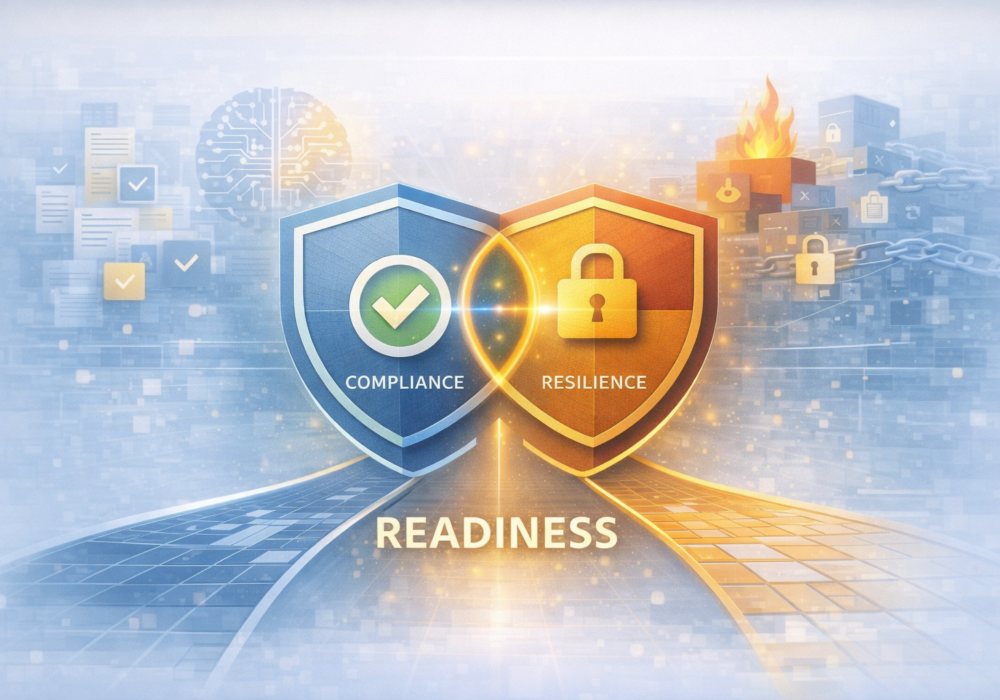
Cyber threats are evolving. Regulatory expectations continue to tighten. Artificial intelligence is accelerating...
Read moreLet’s help Plan, Build and Run your cyber and AI programs to keep your business capable, compliant, and resilient. Because while risk is constant, ready is a choice.